Uta stansburiana
Scientific name. Uta stansburiana
Common Name. Common Side-blotched Lizard
General information. This diurnal lizard has a small territory. When threatened, Uta stansburiana will retreat to a crevice or animal burrow. This lizard species feeds on insects.
Protected status. The Common Side-blotched Lizard is not a protected species in Texas and can be legally collected with a hunting license.
Diagnostic features. Small lizard with single throat fold Middorsal scales are large and keeled Long tail
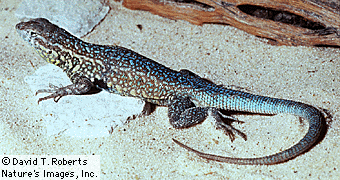
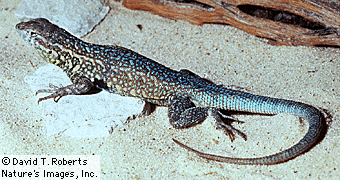
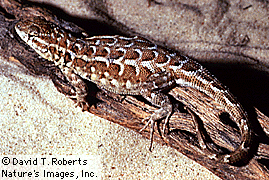
Coloration. Dorsal ground color brown, perhaps with blue or orange. Dorsal pattern consists of blue flecks on dorsum and yellow or orange on the sides. A dark blue or black blotch appears on each side, posterior to the foreleg. Males with blue flecks and spots on dorsum and turquoise tail; females with pale spots with dark edges and little or no blue coloration.
General distribution. In North America, Uta stansburiana is found across most of the western U.S. and adjacent northern Mexico.
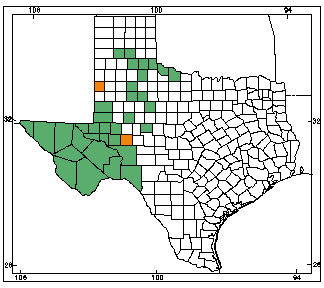
Texas distribution. The single subspecies of Uta stansburiana found in Texas, U. s. stejnegeri, is found in the western deserts and southern portions of the Panhandle.
Habitat. Uta stansburiana is seen in sandy, rocky arid and semi-arid environments; this terrestrial species may also be seen in desert flats.
Reproduction. Breeding occurs at anytime of year with favorable conditions. Small clutches are laid, averaging 3 to 4 eggs/clutch.
Size. Uta stansburiana can reach adult lengths, including tail, of 10-16 cm (4-6.5 in).
Map. Orange counties indicate new county records since previous Herps of Texas update in 1998; all other colored counties reflect known distribution prior to 1998 for species and/or subspecies. Map is based on museum voucher specimens.