Leptodactylus fragilis
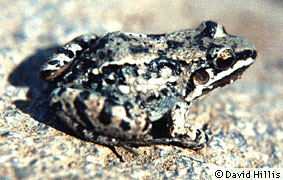
Scientific name. Leptodactylus fragilis
Common Name. Mexican White-lipped Frog
General information. Leptodactylus fragilis is nocturnal and burrows in the damp soil during the day, foraging at night.
Protected status. The Mexican White-lipped Frog is not a protected species in Texas and can be legally collected with a hunting license.
Diagnostic features. Rather pointed head Dorsolateral folds present along torso and circular ventral disk is present on belly (as in E. augusti)
Coloration. Dorsal color varies from gray to brown with dark dorsal spots of varying sizes White or cream colored line present along upper lip.
General distribution. In North America, Leptodactylus fragilis is found from the southern tip of Texas, south through Central America to Venezuela in northern South America.
Texas distribution. In Texas, Leptodactylus fragilis is restricted to the extreme southern tip of the state in Cameron, Hidalgo and Starr Counties.
Habitat. The habitat of Leptodactylus fragilis consists of various moist places including roadside ditches, irrigated fields, and low grasslands.
Reproduction. Breeding in Leptodactylus fragilis takes place during heavy rains in the spring. Eggs are laid in whipped foam secretions in a depression at the base of vegetation near water; tadpoles are protected within this mass, even in dry weather. Tadpoles are “freed” from nest with rains that flood the depression.
Size. Leptodactylus fragilis grows to an adult size of 3-5 cm (1.5-2 in).
Calls.
Map. Orange counties indicate new county records since previous Herps of Texas update in 1998; all other colored counties reflect known distribution prior to 1998 for species and/or subspecies. Map is based on museum voucher specimens.
