Holbrookia lacerata
Scientific name. Holbrookia lacerata
Common Name. Plateau Spot-tailed Earless Lizard
General information. Holbrookia lacerata is a wary diurnal species of lizard, quickly retreating when threatened. They can be conspicuous during the early morning hours when they sun themselves on open ground.
Protected status. The Plateau Spot-tailed Earless Lizard is not a protected species in Texas and can be legally collected with a hunting license.
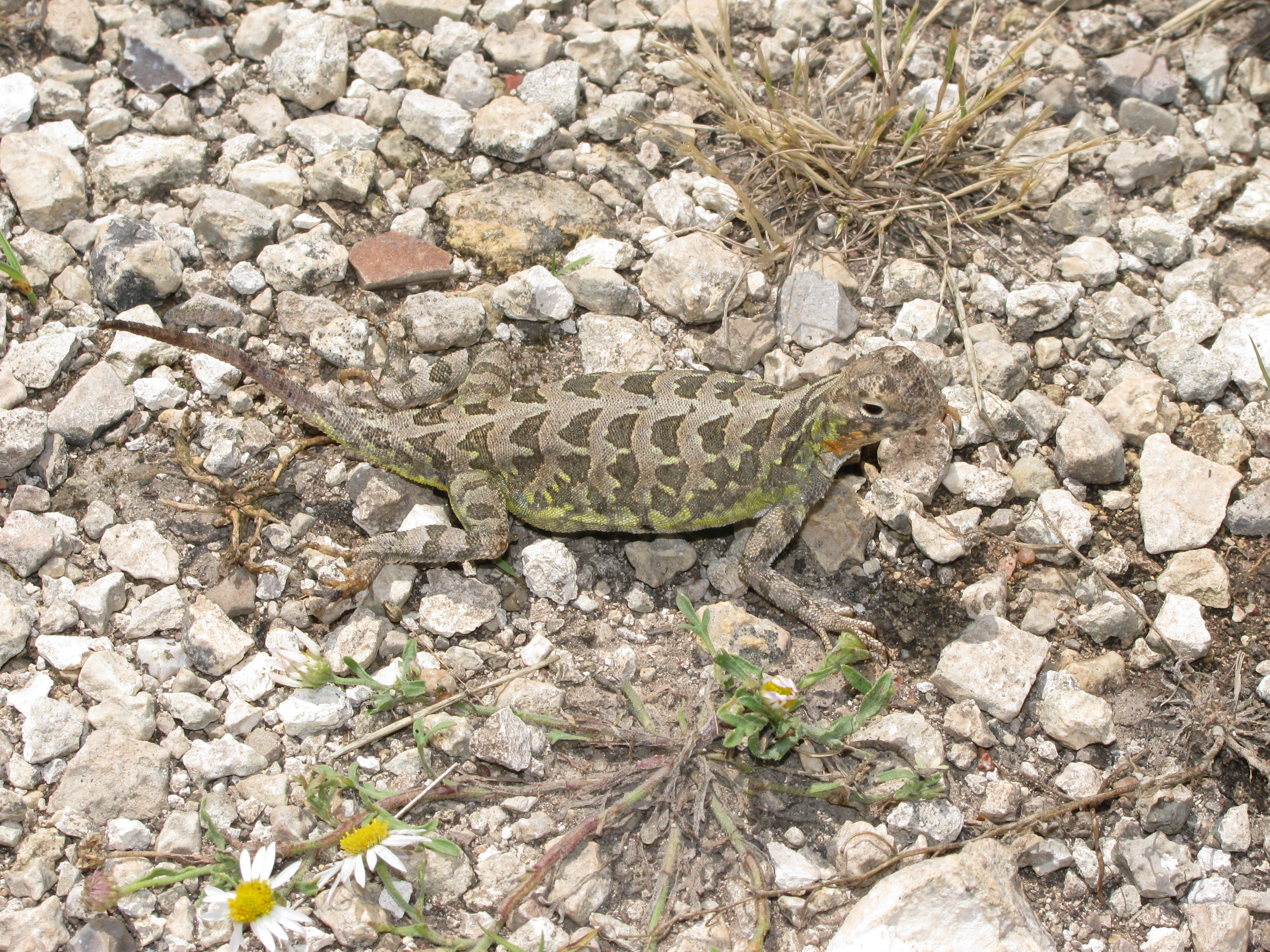
Diagnostic features. Slightly flattened body Two throat folds (one weak) with no external ear openings Two rows of body blotches on either side of midline often fused together. Blotches on legs often form distinct bands.
Coloration. Dark brown spots on lighter brown dorsal surface. Ventral surface white with dark spots on tail. Round, dark spots on ventral surface of tail and lateral black spots on abdomen Females and some males may have red-orange pattern on throat or neck during breeding season
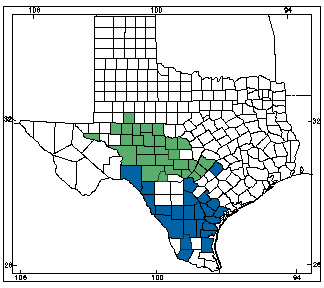
General distribution. In North America, Holbrookia lacerata are found in central Texas and maybe in adjacent parts of Mexico.
Texas distribution. In Texas, the distribution of Holbrookia lacerata extends from portions of west Texas (east of the Pecos River) eastward to the Edwards Plateau in central Texas/
Habitat. Holbrookia lacerata prefers rocky desert flats, areas with sparse vegetation or mesquite-prickly pear associations, and the uplands of the Edwards Plateau in central Texas.
Reproduction. Eggs are laid in the late spring, sometimes with a second clutch laid later in the summer. Clutch sizes ranging between 6 and 8.
Size. Adult body lengths of Holbrookia lacerata, exclusive of tail, range from 3–6 cm (1–2.5 in).
Map. Map is based on museum voucher specimens.