Coleonyx brevis
Scientific name. Coleonyx brevis
Common Name. Texas Banded Gecko
General information. Nocturnal, This nocturnal gecko remains under cover during daylight hours and exits at dusk. Texas banded geckos can commonly be seen on roadways at night as it forages for insects and spiders. This species of gecko emits squeaks when handled.
Protected status. The Texas Banded Gecko is not a protected species in Texas and can be legally collected with a hunting license.
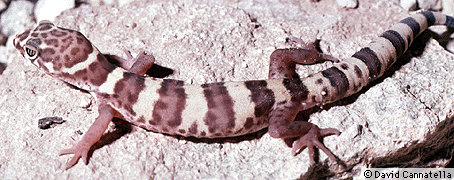
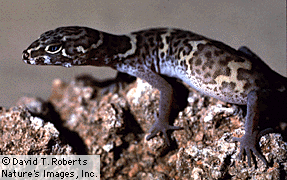
Diagnostic features. Slender body with large head and large eyes with vertical pupils and movable eyelids Small granular scales. Slender toes without pads. Thick tail equal in length to the head and body. Females grow larger than males
Coloration. Pinkish brown ground color with alternating cross bands of brown and pale yellow. Dark and light colored blotches and spots on body create mottled look, especially with age.
General distribution. In North America, Coleonyx brevis is found across much of west Texas, as well as parts of south Texas, New Mexico, and northeastern Mexico.
Texas distribution. In Texas, Coleonyx brevis is found in the Trans-Pecos and the western portions of south Texas.
Habitat. The Texas Banded Gecko is a terrestrial species lives in dry, rocky areas, where it can be found in canyons and crevices, as well as under rocks and fallen yuccas.
Reproduction. Breeding is not well described, but probably occurs for a few months in late spring with one or two eggs being laid. Juveniles have a distinctive chocolate brown bands that develop light areas as they become adults.
Size. Adult Coleonyx brevis may reach lengths of 10-12 cm (4-4.75 in), including tail.
Map. Orange counties indicate new county records since previous Herps of Texas update in 1998; all other colored counties reflect known distribution prior to 1998 for species and/or subspecies. Map is based on museum voucher specimens.
