Anolis sagrei
Scientific name. Anolis sagrei
Common Name. Brown Anole
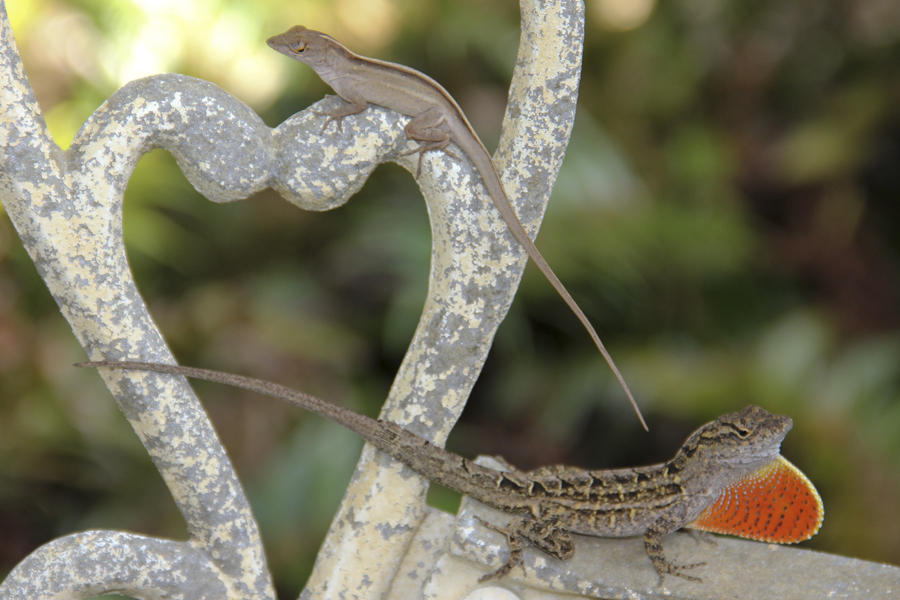
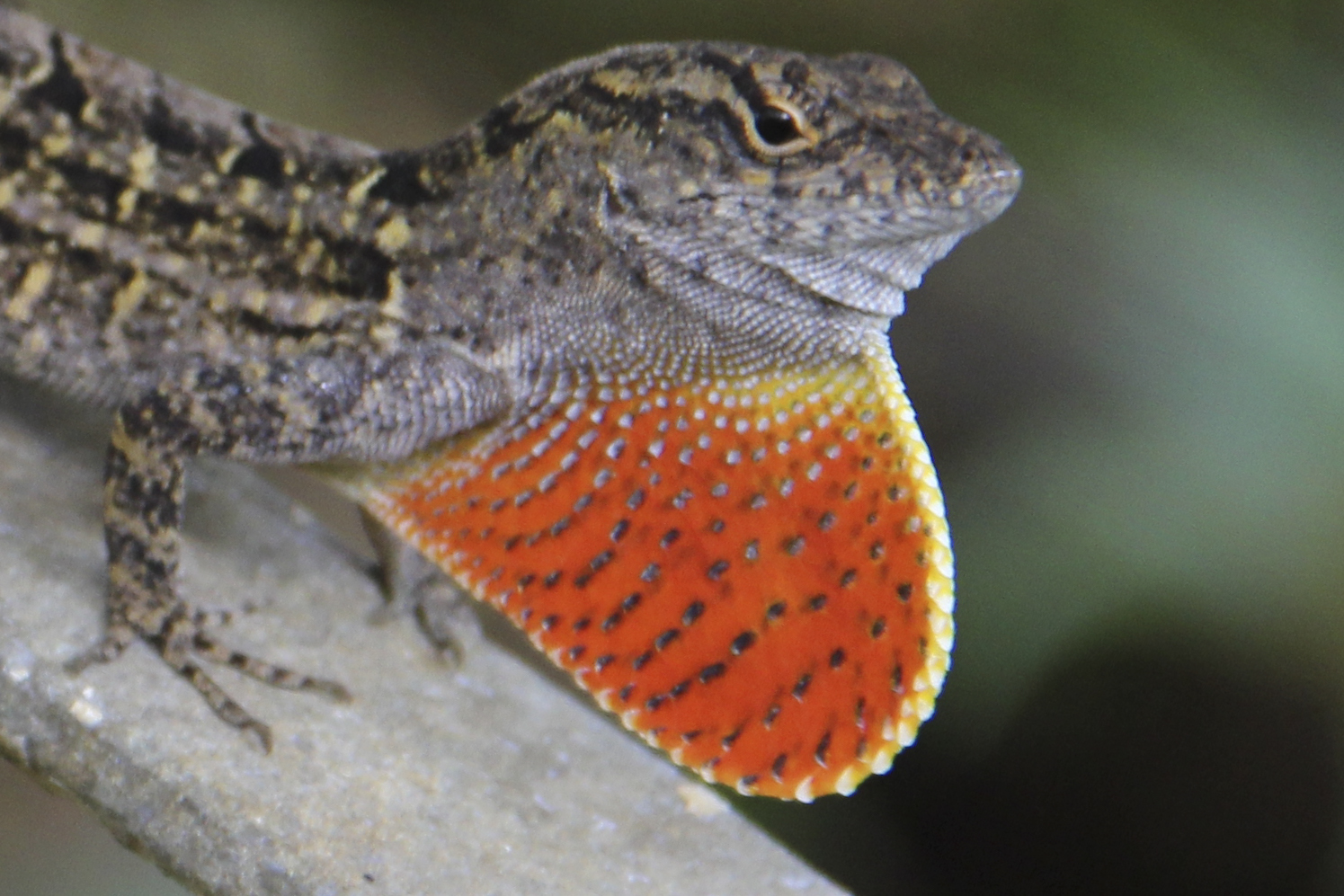
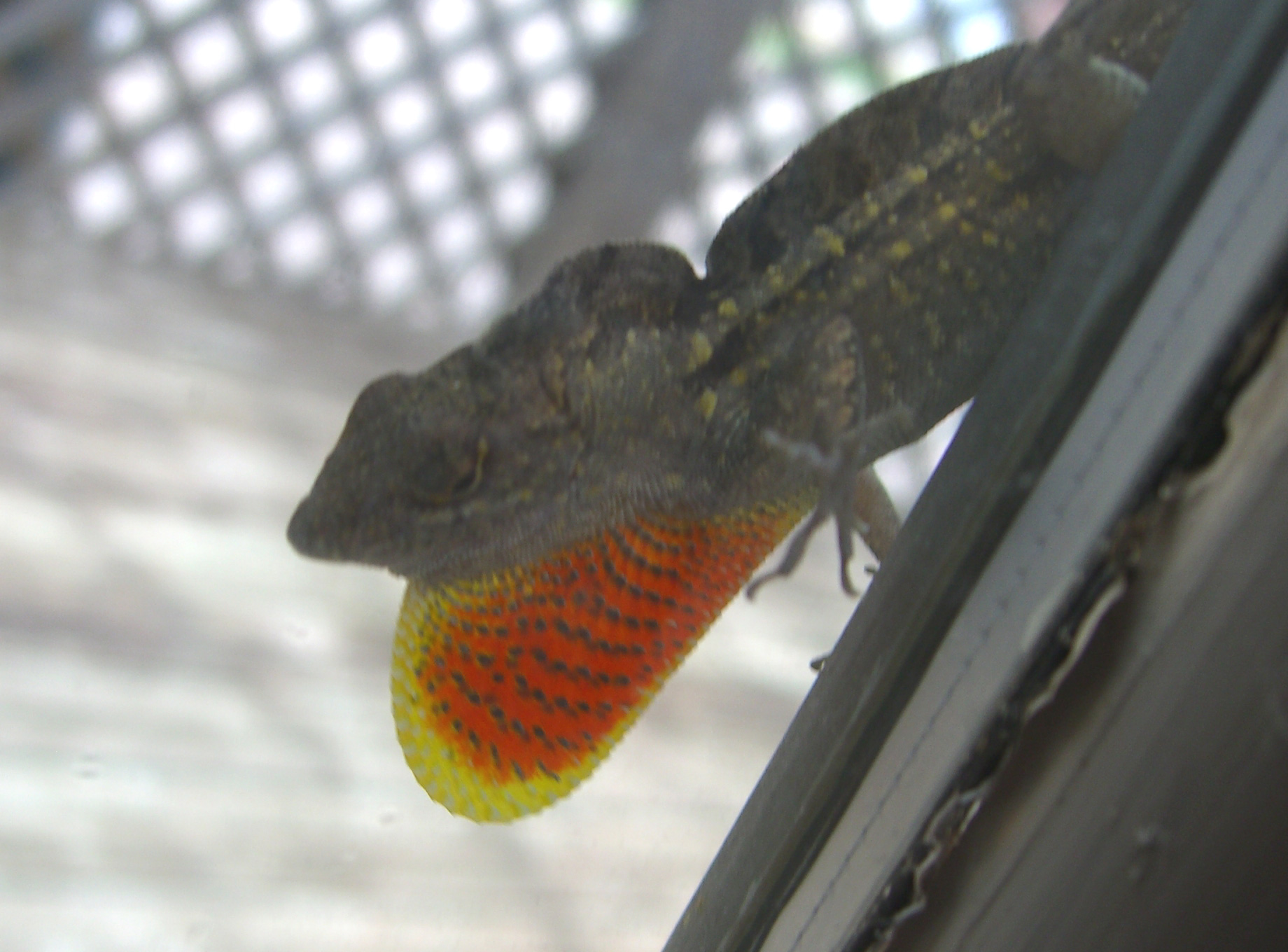
General information. This diurnal lizard has a small territory, but will aggressively defend it. If an intruder approaches, the male will compress its body, extend the dewlap, and bob its head. Anolis sagrei is a terrestrial species, but is adept at climbing, enabling this species to feed on insects and spiders in a variety of habitats. It can hop to avoid being captured. This lizard species also sheds its skin several times a year.
Protected status. The Brown Anole is not a protected species in Texas and can be legally collected with a hunting license.
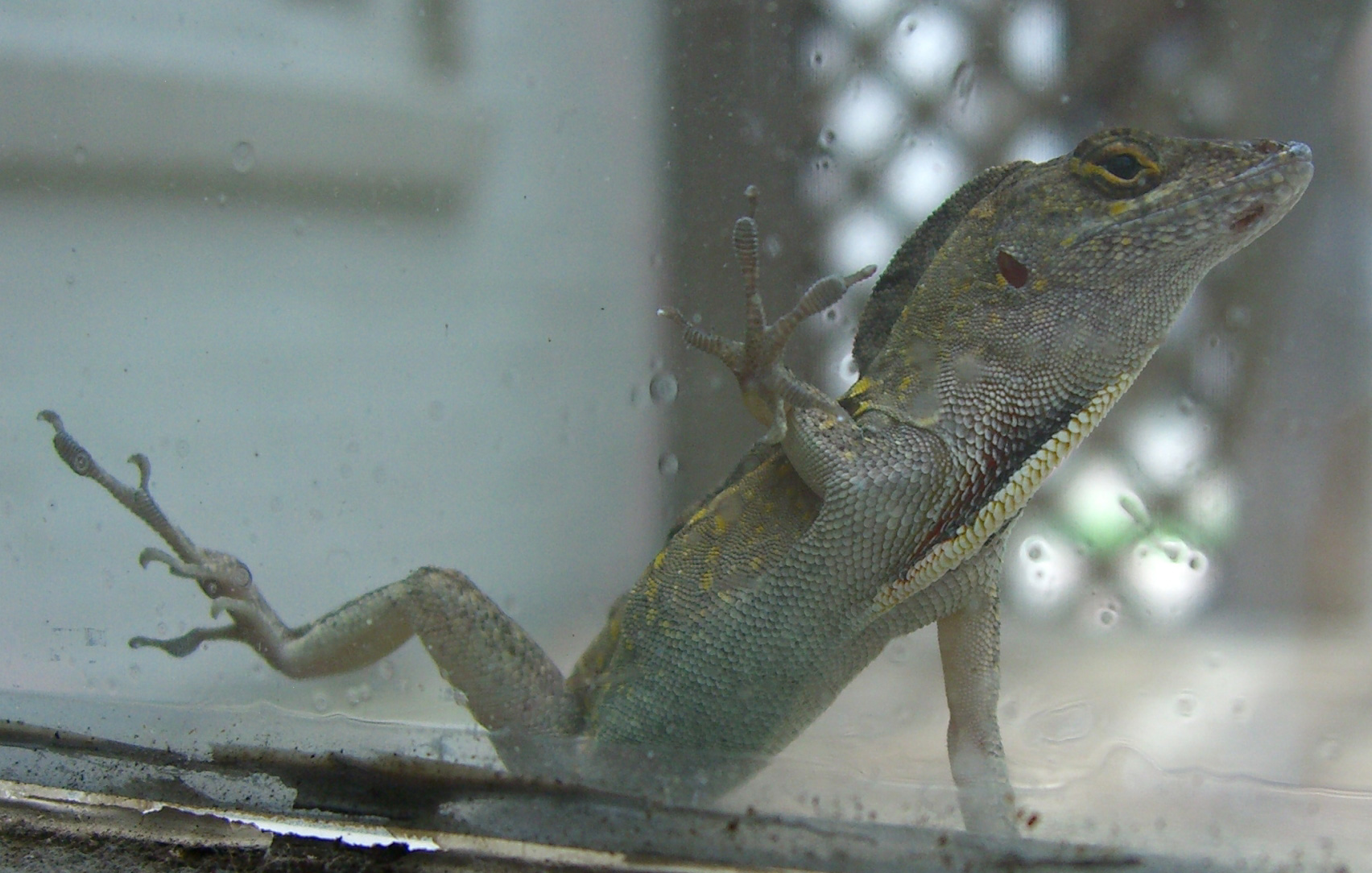
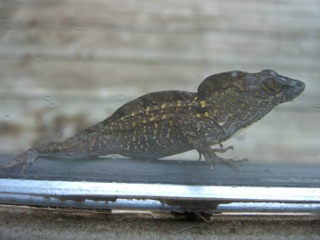
Diagnostic features. A relatively small lizard with a short snout, long claws and a long tail
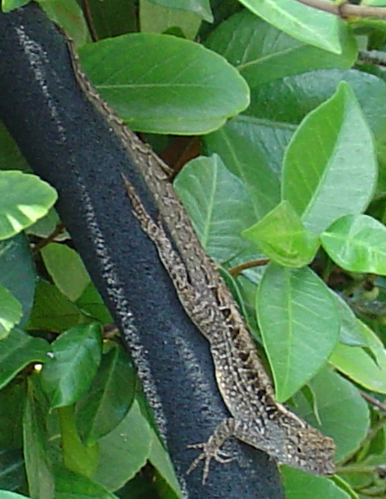
Coloration. Dorsal ground color is light brown Dorsal pattern consists of dark blotches on either side of a light middorsal stripe Males have light colored streak on throat when dewlap is NOT extended Males have orange-red dewlap with light center stripe.
General distribution. In North America, Anolis sagrei is found in Florida and isolated population exist in Texas.
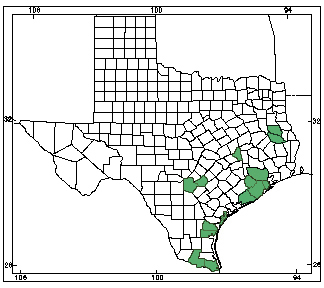
Texas distribution. In Texas, Anolis sagrei is found in the Houston and San Antonio areas, as well as the Rio Grande Valley and the Texas Gulf Coast,and may continue to be found in new regions around the southern portion of the state.
Habitat. Anolis sagrei is mostly seen in trees, shrubs, vines, and on fences in moist environments.
Reproduction. Breeding occurs for several months beginning in late spring. A single, small, softshell egg is laid about every two weeks until September. Incubation is
Size. Anolis sagrei can grow to 12.5-20 cm (5-8 in) in length (including tail), with males typically growing larger than females.
Map. Map is based on museum voucher specimens. Last updated 12 November 2014.