Agkistrodon piscivorus
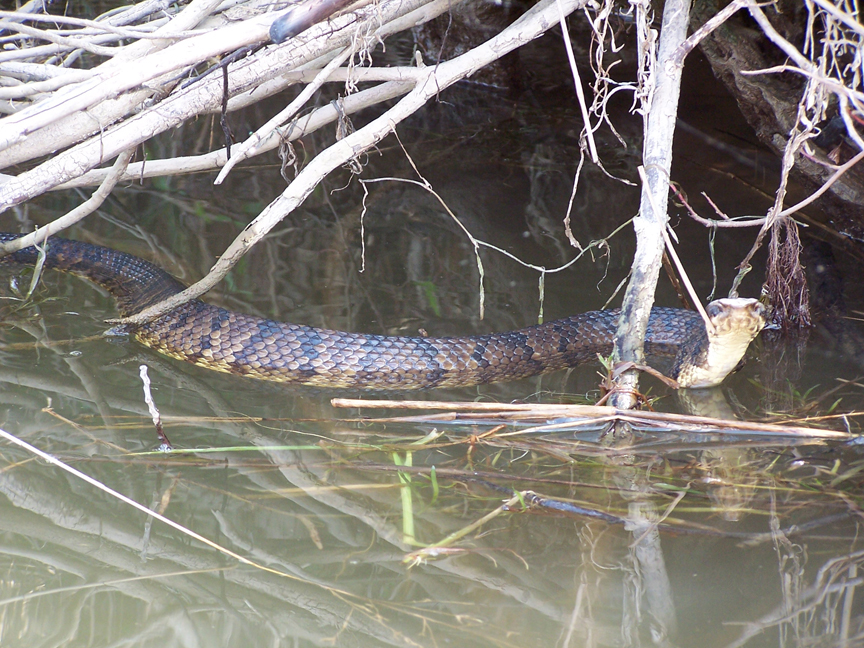
Scientific name. Agkistrodon piscivorus
Common Name. Cottonmouth
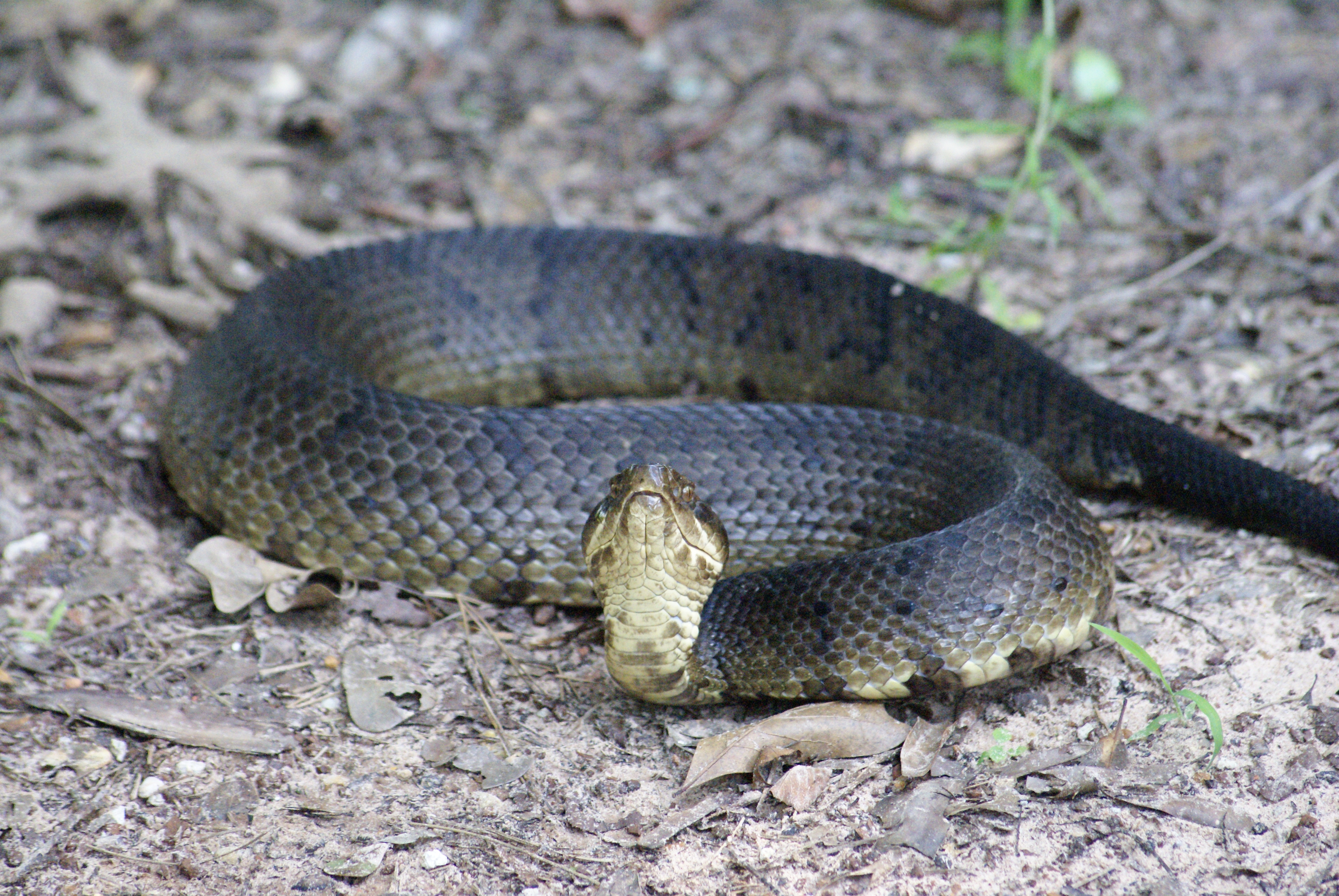
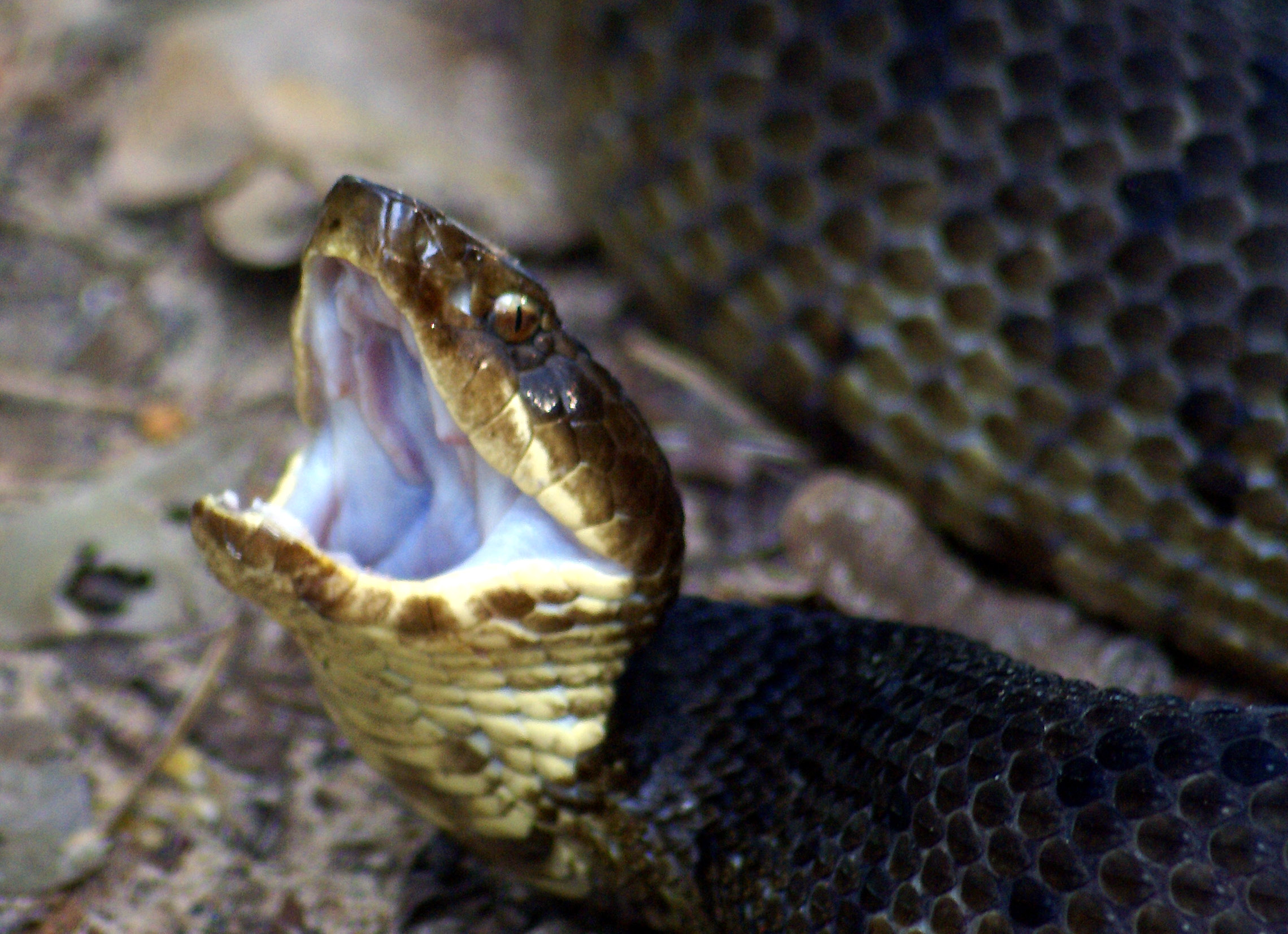
General information. Cottonmouths are venomous, and are therefore highly dangerous if approached or handled. They are not generally aggressive and will most likely flee any confrontation if given a chance to retreat. Cottonmouths are dark, faintly patterned snakes, best known for their defensive posture with a gaping, white lined mouth. The specific epithet piscivorus describes the one of the prey species of the cottonmouth fairly accurately: fish. The cottonmouth is also fond of frogs, mammals and other snakes. Although it may be commonly seen in lakes and ponds, areas frequented by humans, few human fatalities are recorded as a result of bites by cottonmouths.
Protected status. The Cottonmouth is not a protected species in Texas and can be legally collected with a hunting license.
Diagnostic features. Undivided anal scale Dorsal scales keeled, in rows of 25 near midbody Named a “cottonmouth” because of the white inner lining of the gaping snake’s mouth
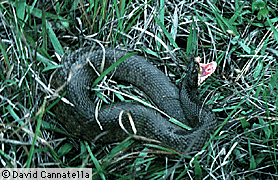
Coloration. Dark brown or grey background color with a black or brown belly Uniformly colored black crossbands generally present, but they may not be very distinct against the dark background, with some individual snakes appearing not to have any vestiges of crossbands.
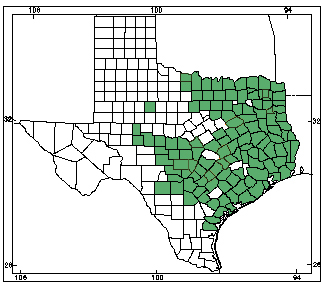
General distribution. In the United States, the three subspecies of Agkistrodon piscivorus are found from central Texas, north to Missouri, east to the Virginias and south to Florida. There are no populations of cottonmouths found in Mexico.
Texas distribution. Agkistrodon piscivorus leucostoma, the only subspecies found in Texas, ranges from central Texas, including portions of the Edwards Plateau, to the eastern piney woods and south to the Gulf Coast.
Habitat. The Cottonmouth is extremely aquatic and is most at home near or in the water. Its cousin the Copperhead is frequently found away from actual water and can be seen deep in woodland habitats.
Reproduction. The neonates are live-born, emerging from their mothers in late summer and early fall. The number per litter averages five snakes, with the snakes measuring 15-28 cm (6-11 in). Juvenile cottonmouths often look drastically different than their parents, as they may have a distinct pattern of black crossbands over a tan or grey background. These juveniles also have a bright yellow tail, used in luring small prey within striking distance, which is lost as the snakes mature.
Size. In Texas, adult cottonmouths measure between 76-105.5 cm (30-42 in); record length is 152 cm (60 in).
Map. Orange counties indicate new county records since previous Herps of Texas update in 1998; all other colored counties reflect known distribution prior to 1998 for species and/or subspecies. Map is based on museum voucher specimens.